This page is in preparation.
Artifacts related to cheetahs from Ancient Egypt, Islamic literature and the Mughal Empire are mostly known. I wanted to create a comprehensive page for Cheetah depictions from European literature. Even though there are clear cheetah depictions they are often not referred to as cheetah depictions and are hard to find. It is assumed that European artists couldn't distinguish different varieties of leos. Although this may hold accurate in some instances. This is clearly not the case all the time.
There are three different important clear visual qualities cheetahs possess:
- Tear marks.
- Spotted with dots.
- Dots transition to circles through end of the tail
Also cheetahs were elite pets historically thus especially in Islamic literature sometimes they are depicted with a collar. This is also very distinguishing. Using cheetahs for hunting and mounting horses with them considered a custom among Islamic Rulers and elite that spread to Europe around 12-14th centuries.[1] Additionally elites in ancient Egypt is known with their interest in cheetahs. This page focuses on Medieval Europe.
¶ Artifacts with an Apparent Cheetah Depiction
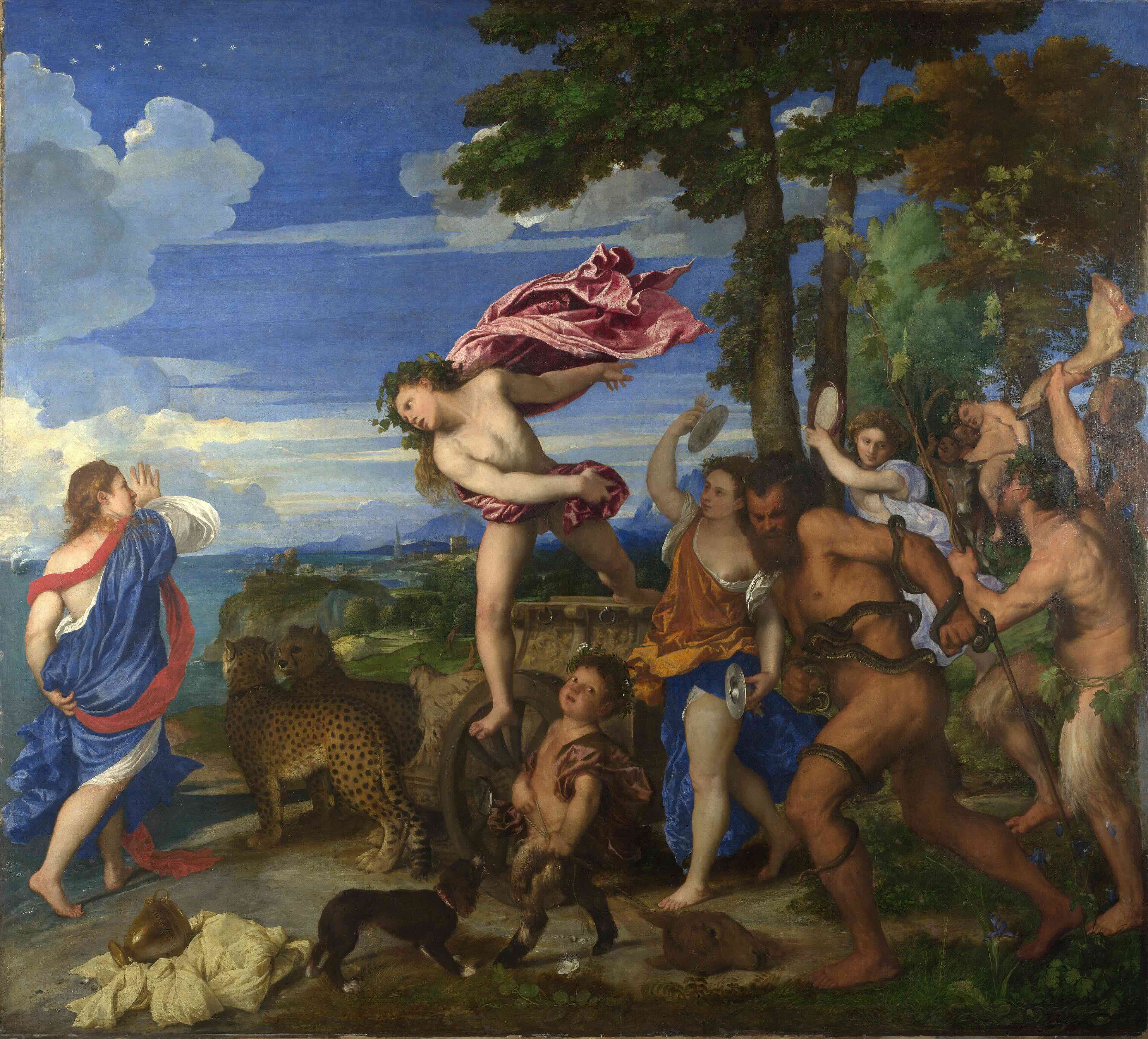
¶ Titian, Bacchus and Ariadne
(External links: Wikipedia)
Those two leos are clearly cheetahs. It has been noted in the literature[2].
Everybody is looking at somewhere random in chaos meanwhile cheetahs are just looking at each other calmly. "Bacchus". Is it an anagram for Turkish "Bakış" ?
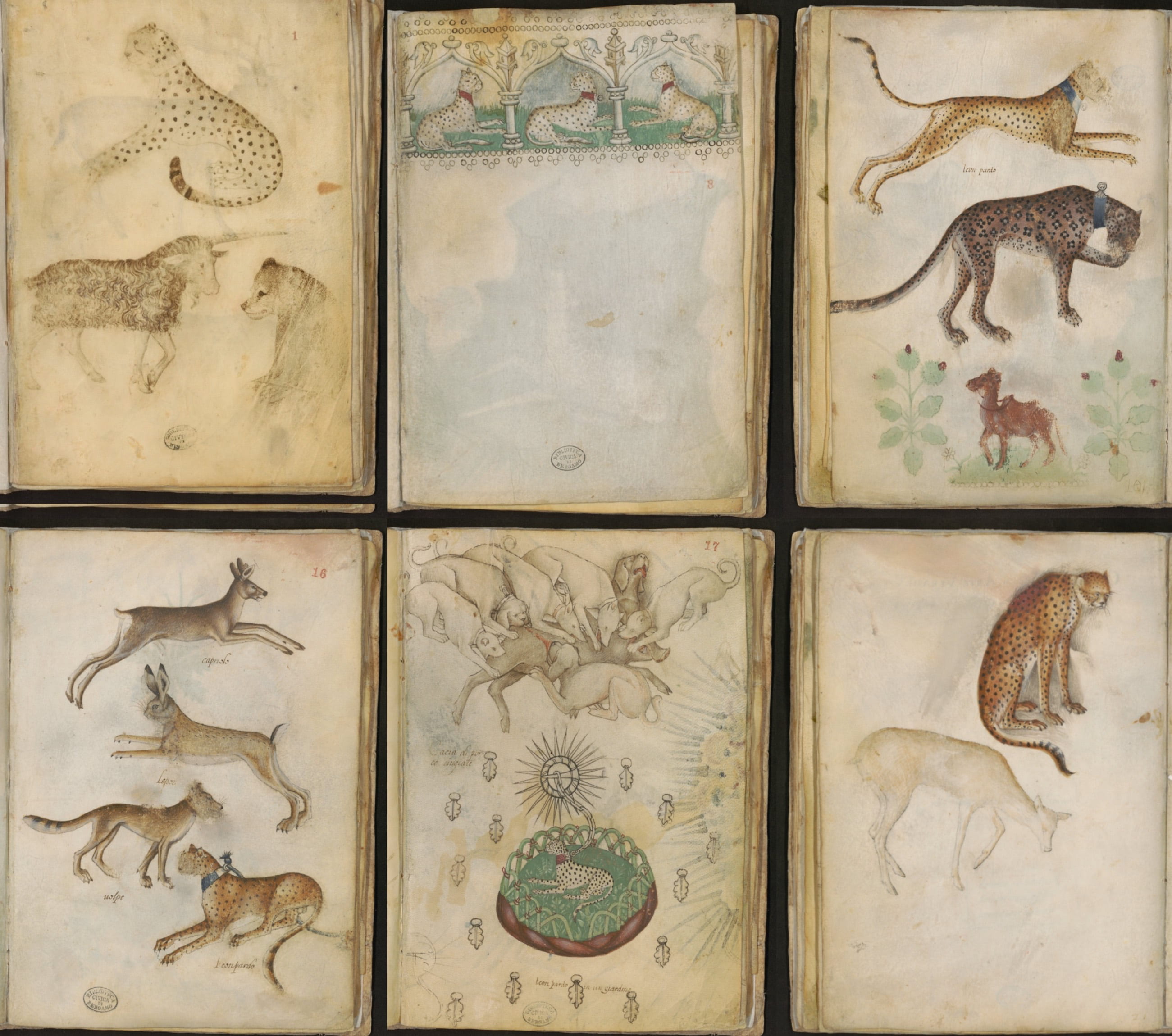
¶ Sketches of Giovannino de' Grassi
There are many cheetah depictions in the Sketchbook of Italian architect and artist Giovannino de' Grassi. This sketchbook mostly contains drawings of various animals.
(Image Source)
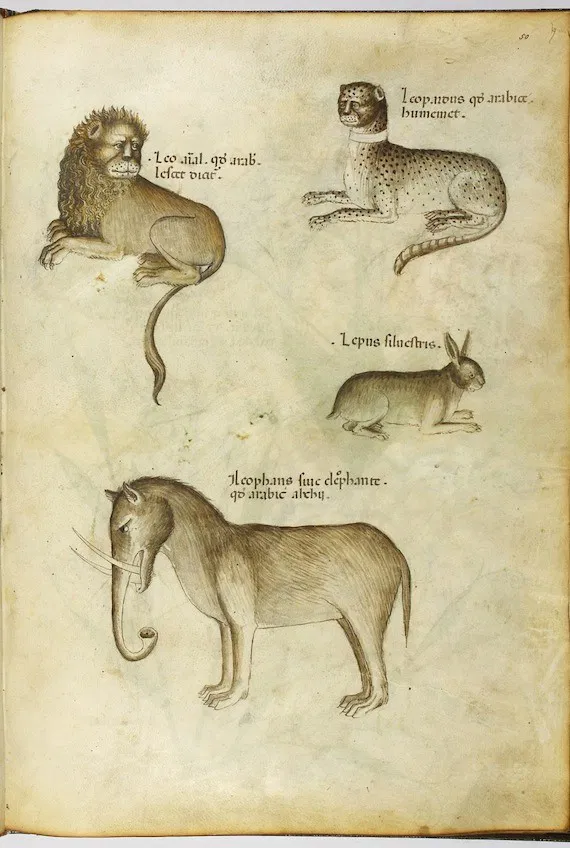
¶ Tractatus de Herbis
(Wikipedia , Image source)
An illuminated manuscript about plants from the 15th century.
In this instance tear marks are not 100% clear. But it is dotted and there are circles on the tail. And it has a collar. So 99%+ it was intentionally drawn specifically as a cheetah. The crazy thing is the text says it is "humemet" in Arabic. This does not correspond to any Arabic word of relevance. Was the writer trying to encode a message?
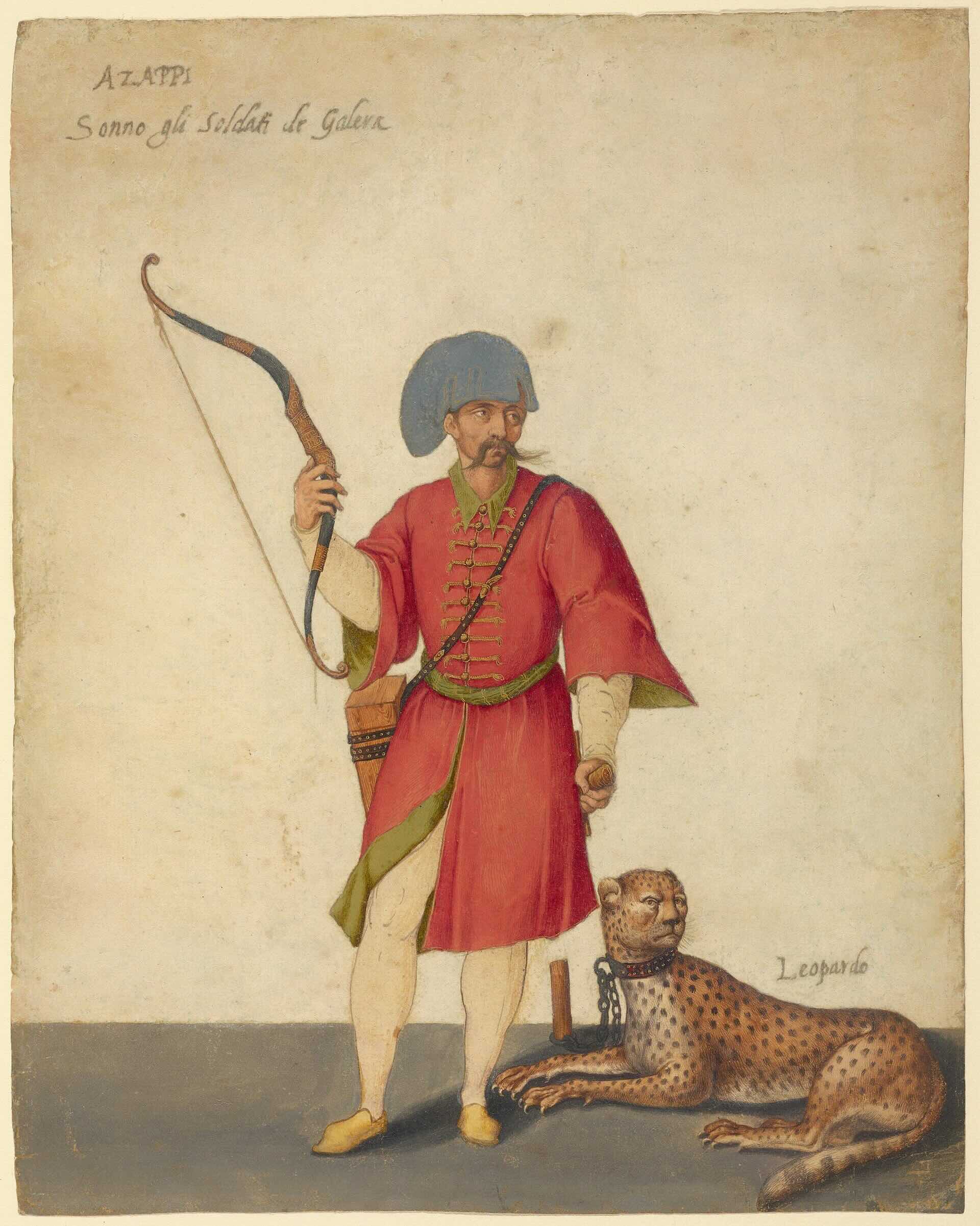
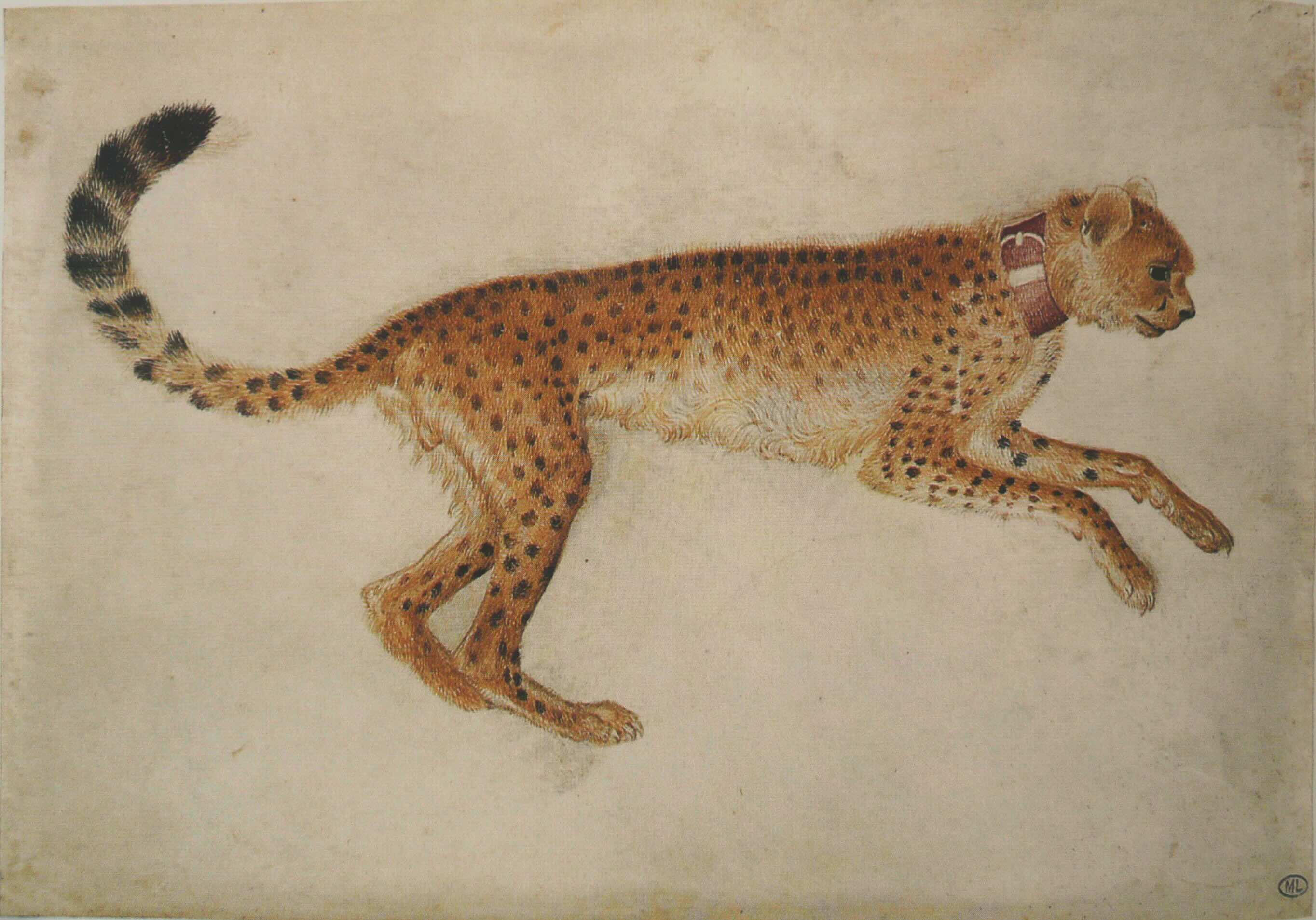
¶ Jacopo Ligozzi, An Azappo Archer with a Cheetah
(Source)
Tear marks are missing but possess all other distinguishing features and considered a cheetah according to source. Similar to Giovannino's sketch cheetah is chained loosely. Although it is possible artist was careless about the detail.
¶ Anonymous Sketching of two Cheetahs from 1400
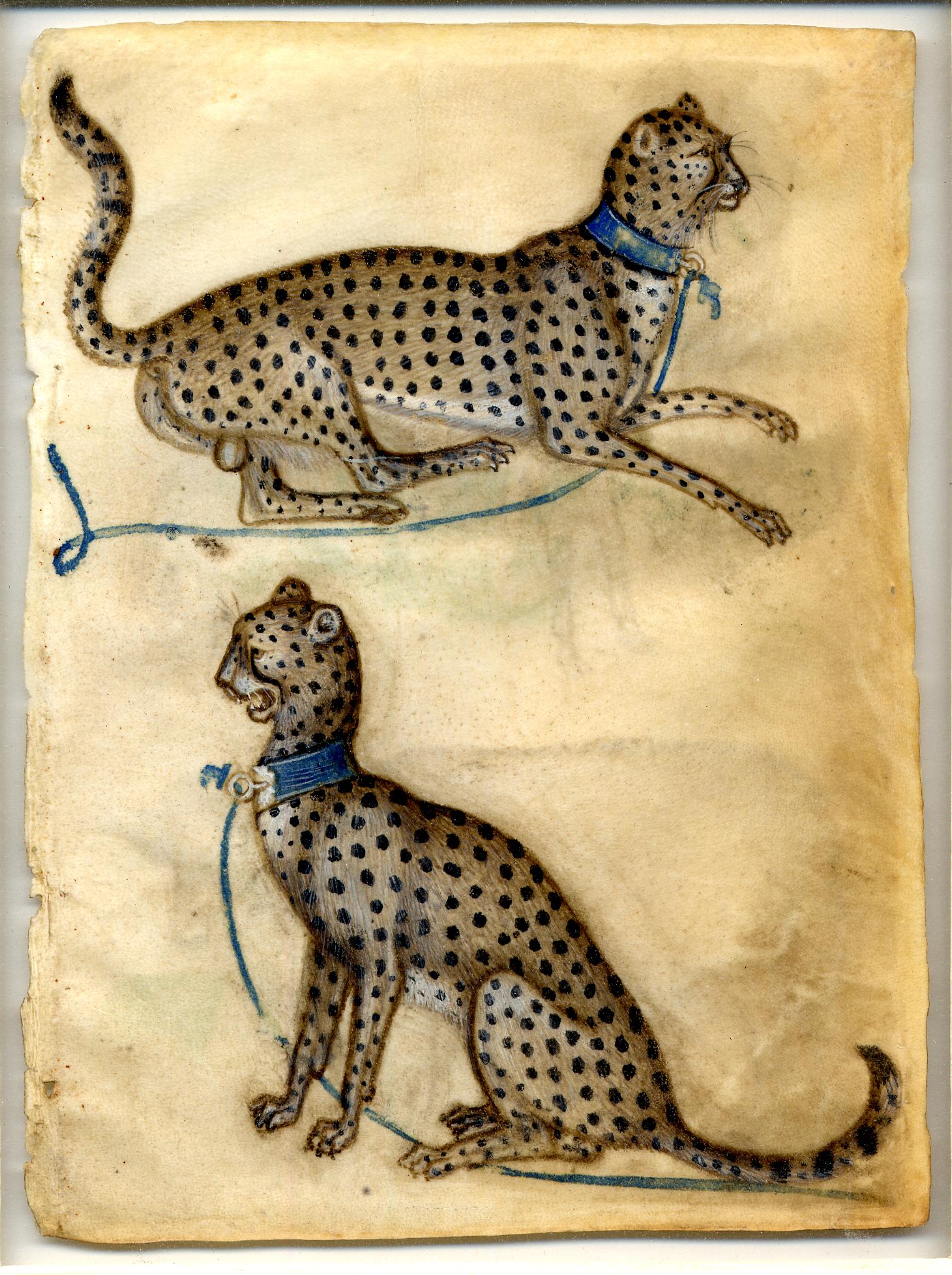
¶ Antonio Pisanello, Codex Vallardi
(For information about the source: Wikimedia)
A cheetah illustration found in a manuscript from 15th century.
Even though distinguishing features are very carefully depicted tear marks are missing.
¶ Benozzo Gozzoli, Medici Palace, 1459
Depicted on wall of Medici Palace. All details are clear except circles on the tail. Clearly a cheetah.
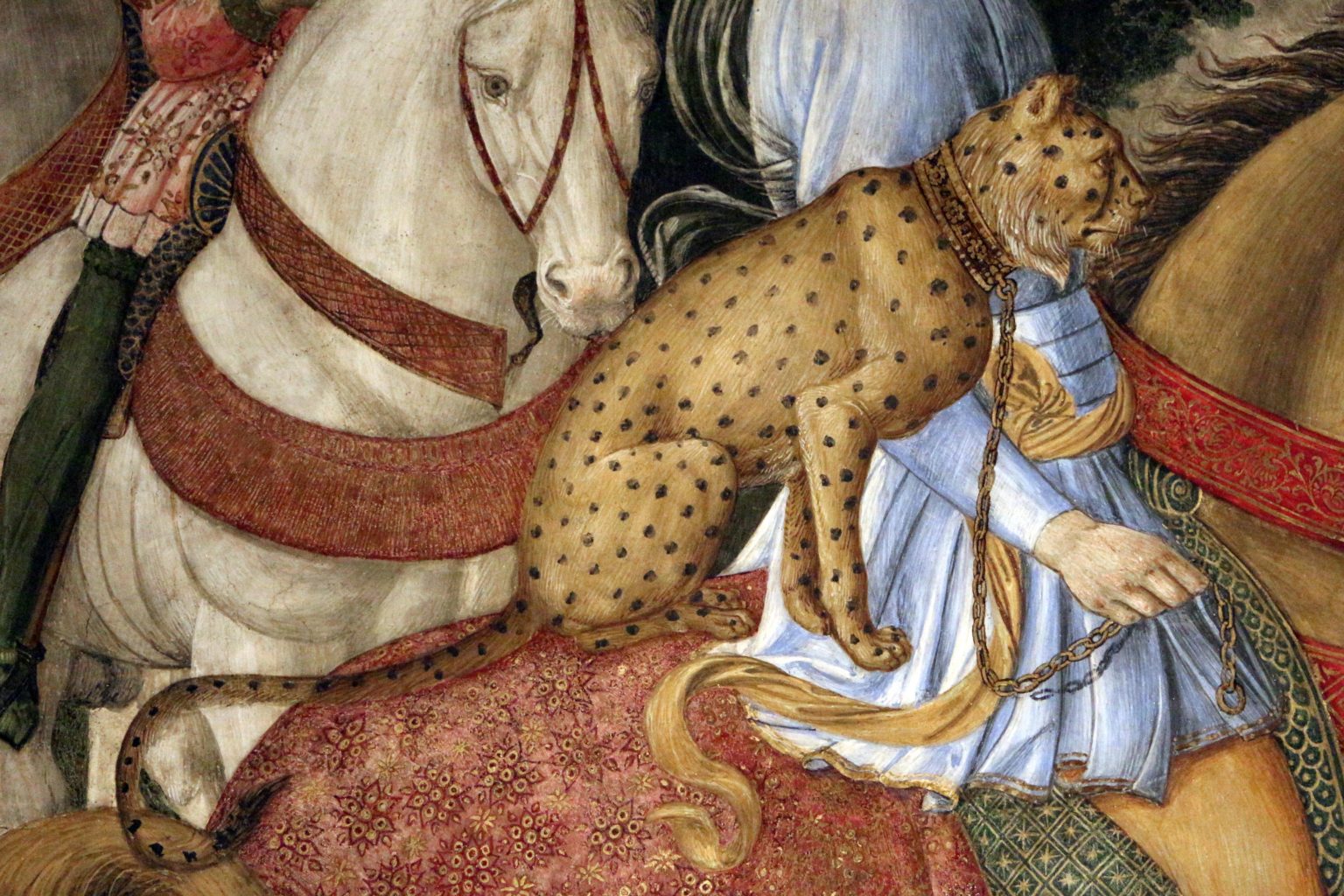
(photo: Sailko, CC BY 3.0)
¶ Artifacts with Ambigious Cheetah Depictions
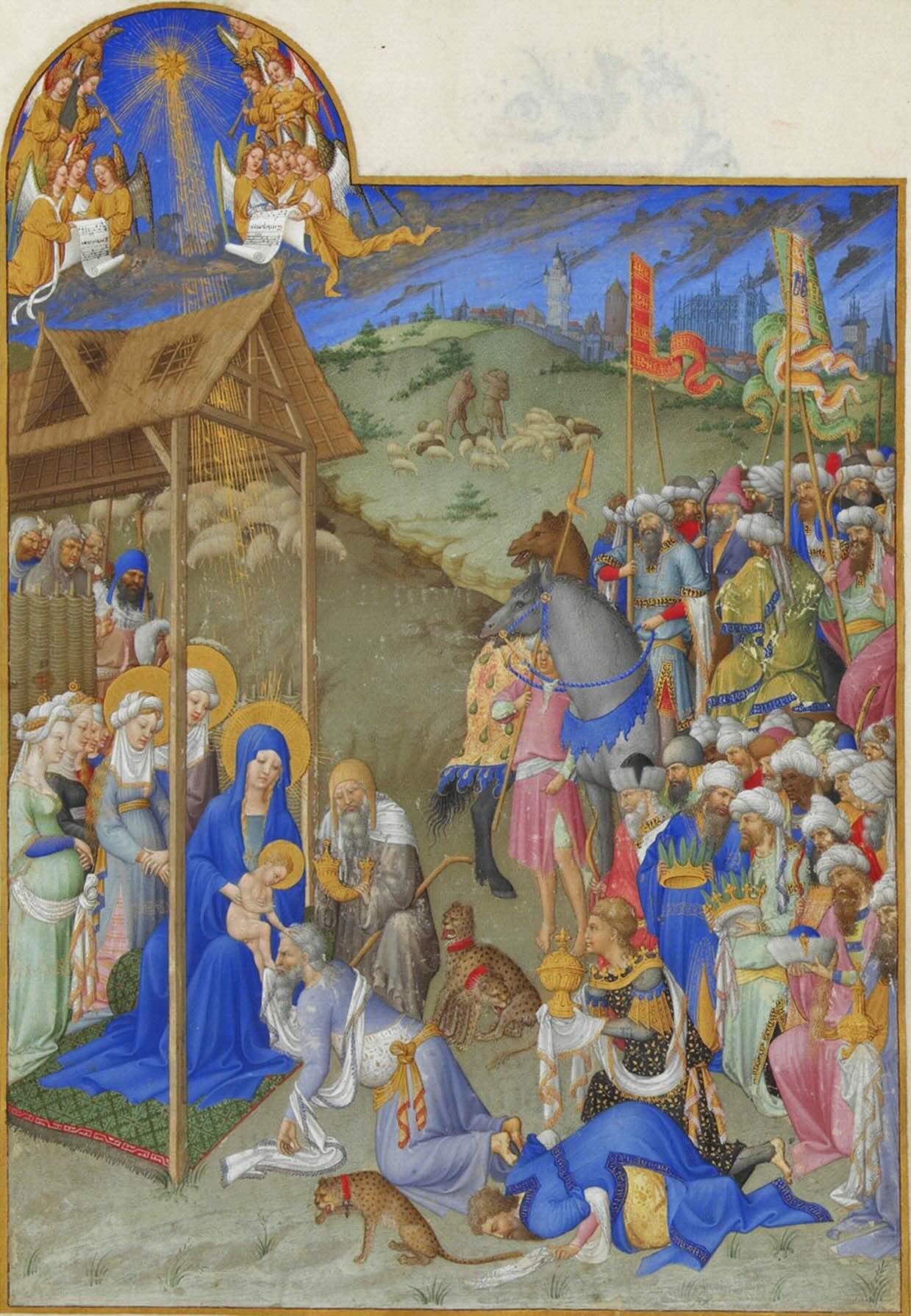
¶ Très Riches Heures du Duc de Berry, c. 1416
A book of hours manuscript. (Wikipedia - Image Source)
Look like cheetahs. Almost certainly intentionally.
¶ Gentile da Fabriano, Adoration of the Magi, 1423
(Wikipedia)
Although there are no details, because it is on a mount most likely a cheetah.
Cheetah is hidden just above the light brown horse at the bottom right. There are more cheetahs on mounts at the road in the background.
(Image is cropped. For metadata and full version: Source)
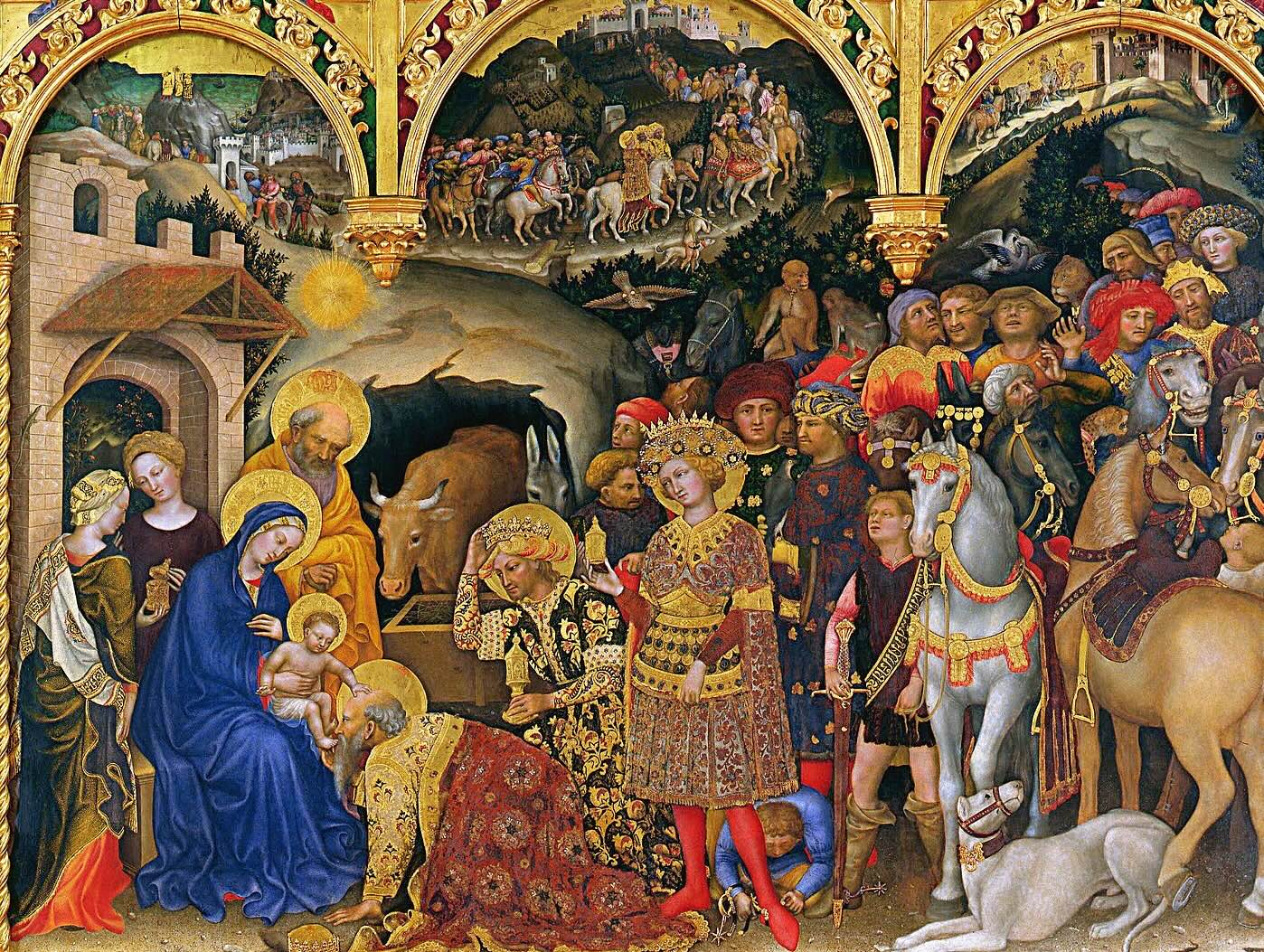
These first two are not really ambiguous maybe I should move to first section.
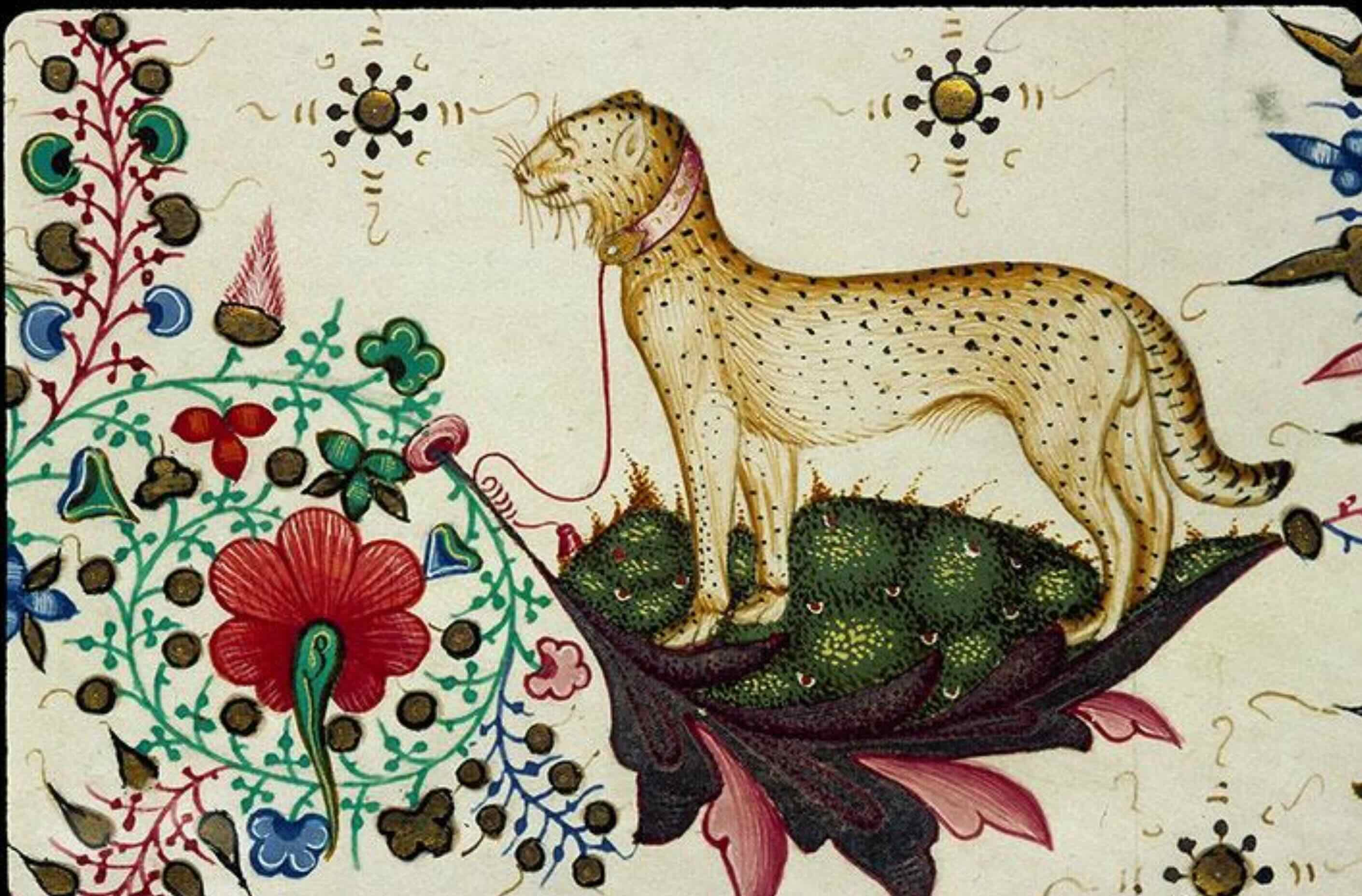
¶ Breviary of Marie of Savoy
(Source - About manuscript: Wiki)
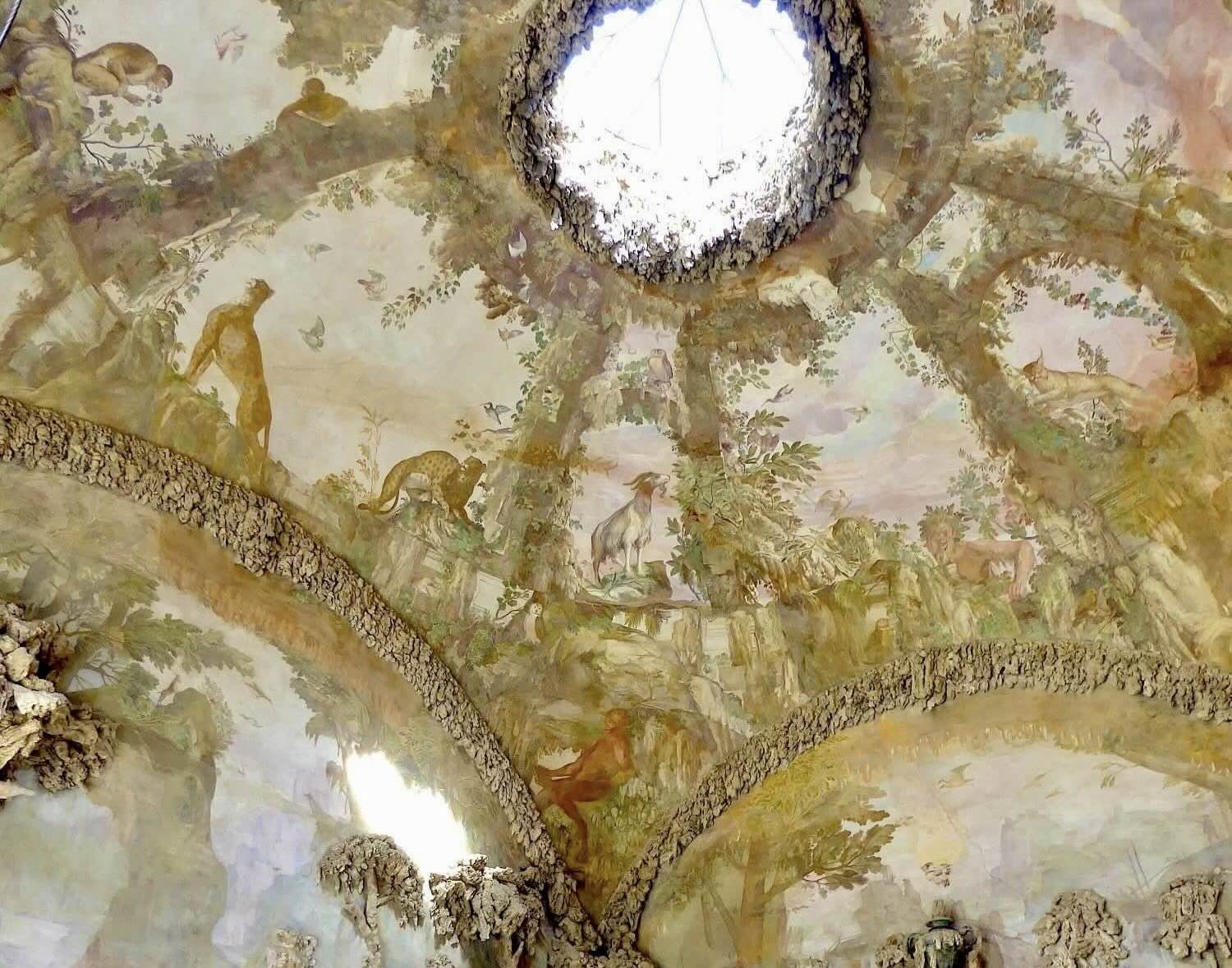
¶ A Fresco in Buontalenti's Grotta
(Img Source)
A fresco by Bernardino Poccetti in the first hall of Buontalenti's Grotta Grande in Boboli gardens, dated between 1586 and 1587[3].
I guess this is more of an example of how generic leopards were drawn rather than an artifact likely containing a cheetah depiction.
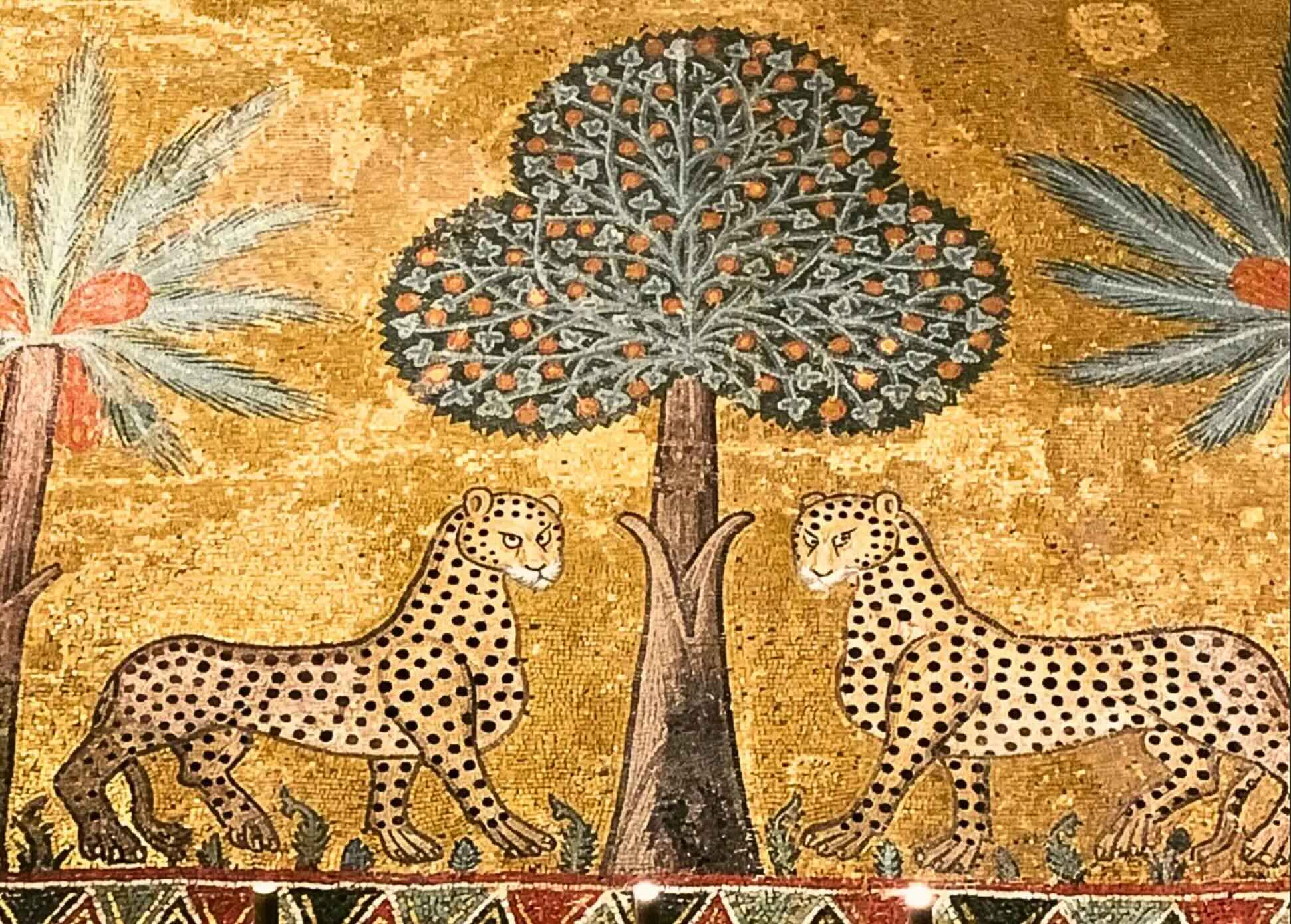
¶ Mosaic in Norman Palace, Sicily
Eyes are draw similarly to Phoenician Alpha letter. Which is where latin "A" letter originates from.
¶ About Distribution of Artifacts
Although there can be availability and accessibility issues nevertheless there is an obvious situation. It is likely that many of the artifacts with cheetah depictions are result of some sort of movement among Italian intellectual around 15th century. Maybe they can be labeled as üzeries. I previously speculated Da Vinci was part of such movement.
An alternative and obvious explanation for artifacts can be interest of elites owning cheetahs with Islamic influence. There is a publication about this[1:1]. There was cheetah trafficking between Muslim and European rulers and some European rulers like Frederic the second was very interested in cheetahs. Although interest in cheetahs by elites is not uncommon. The sudden interest in cheetahs around the same time of Seljuks, Ayyubids indicates it may not be just a coincidence. In the publication it is mentioned that Salading gifted two cheetahs to an European ruler. Saladin was without any doubt cooperating with order of Assassins. They did fake multiple assassination attempts and a fake siege of castles belongin to order of assassins. Frederick II known to have good relations with Order of Assassins. It is even speculated he was offered help to eliminate his enemies.(Needs some sources.) According to the publication mentioned Frederick was very aggressive with cheetahs. Owned too many of them and gifted to other rulers. In the publication it is mentioned that he ordered 60 carpets for his cheetahs.
Especially drawings of people driving horse with cheetahs also mounted are most likely not random. And it doesn't feel like too logical to ride with fastest land animal on a mount. If they were using it to hunt, it can also follow his owner. It is likely an artifact associated with Turkish name "Alparslan". Which means with cheetah. Maybe like Al Pars + Lan. "Lan" means with in Turkish. "Pars" means something like Leo. "Al" can both thinked like Arabic Al prefix, which is actually designed to resemble tear marks of cheetahs, or maybe like "Alı" implying letter "A" on the forehead. Another variant is "Ay+Bars". "Ay" also means moon in Turkish over reflection. In cheetah's case it is because there are two symmetrical A's based on Phoenician alphabet. So technically this should be older but it is also possible retrospectively constructed in recent centuries.
The word for horse is "at" in Turkish. For instance "Üzerine çitaylan biner" or "Üzerine alparslan biner" means something like he mounts over with a cheetah.
There are countless examples of likely artificial artifact placements. Starting from Turkish and Arabic words for numbers hundred and thousand. (The word for thousand and driving is same in Turkish.) This cheetah thing is so extravagant it is seriously possible to consider if Quran is a book like "How to train your cheetah.". I am not serious with this but there has to be many people who previously think about it.
Take Albert for instance. "pars" is "pard" in other languages. So it seems like it is equivalent of Turkish Alpars. (Although it doesn't really directly exists in Modern Turkish.) I can't say this is definitely the case but obviously very likely. Paris, Barcelona...
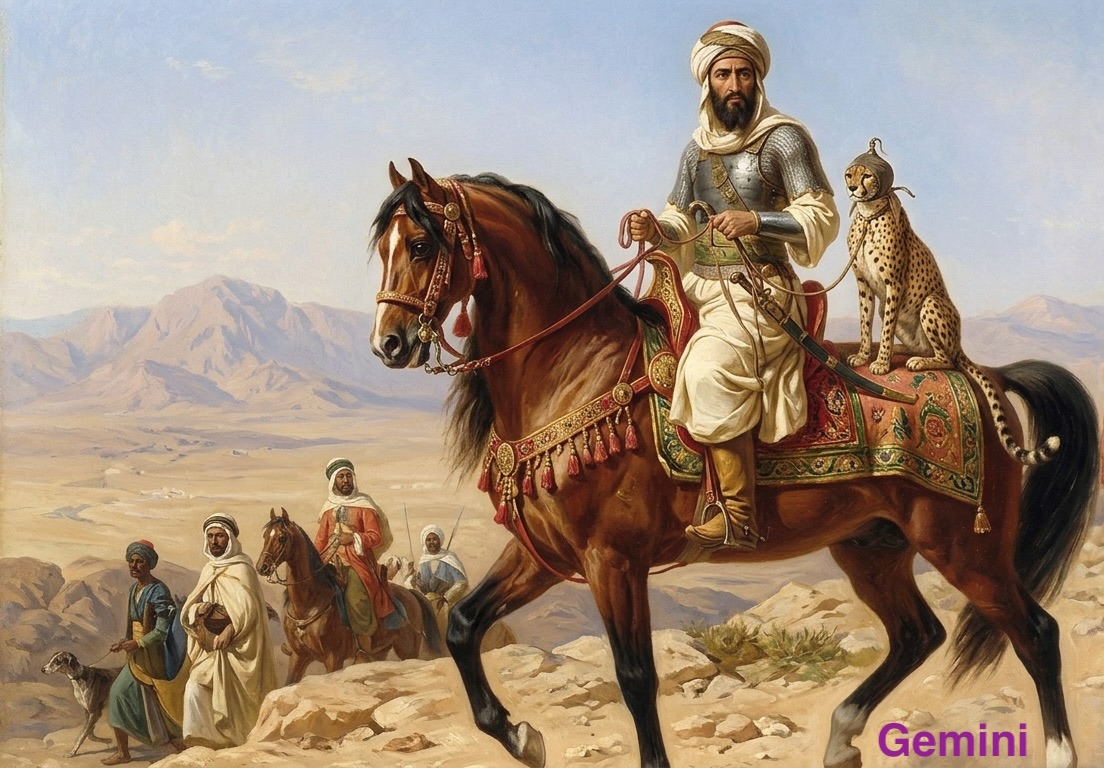
That rope look stupid but I am lazy to fix it.
Thierry Buquet. Hunting with Cheetahs at European Courts, from the Origins to the End of a Fashion. Weber, Nadir; Hengerer, Mark. Animals and courts : Europe, c. 1200-1800, De Gruyter Oldenbourg, pp.17-42, 2020, 978-3-11-054479-4. ⟨10.1515/9783110544794-002⟩. ⟨hal-02139428⟩ ↩︎ ↩︎
Warren Tresidder, The Cheetahs in Titian's "Bacchus and Ariadne", The Burlington Magazine, Vol. 123, No. 941 (Aug. 1981), pp. 481–483, 485. ↩︎
Marco, Masseti. (2009). Pictorial evidence from medieval Italy of cheetahs and caracals, and their use in hunting. Archives of Natural History. 36. 37-47. 10.3366/E0260954108000600. ↩︎